Cardiff’s Low-Carbon Building Projects: How the city is shifting to a low-carbon built environment
Cardiff is changing the way its buildings are planned, built and upgraded to cut emissions, boost resilience and create healthier places to live and work. This article explains what a low-carbon built environment looks like, why theOne Planet Cardiff ambition matters here, and how new-build standards, retrofit programmes and key technologies are being rolled out across the city. You’ll find practical steps for homeowners and businesses to find support, compare heating and generation options, and navigate retrofit funding and contractors. We map council-led programmes such as Re:Fit and the Local Area Energy Plan (LAEP), review Passivhaus and zero-carbon new builds, and explain how district heating, heat pumps and solar PV cut operational and embodied carbon. Throughout, the guidance focuses on clear actions, eligibility routes and where residents and developers can get tailored help – and where Cardiff-based practices such as Jamatek Design Studio can turn low-carbon ambitions into practical architectural schemes and retrofit plans.
What is Cardiff’s climate strategy for a low-carbon built environment?
Cardiff’s climate strategy treats a low-carbon built environment as a joined-up programme to cut both operational and embodied emissions across public and private buildings. It aligns targets, planning tools and local planning policy in Cardiff and delivery programmes so buildings use less energy, move to low-carbon heating and take cleaner electricity — an approach that lowers citywide emissions and improves occupant health. One Planet Cardiff sits at the centre, bringing council operations, Welsh Government partnerships and local energy planning together to unlock funding and deliver flagship projects. That is why local projects prioritise fabric-first measures, renewable systems and long-term maintenance to lock in carbon and cost savings.
How does the One Planet Cardiff initiative drive carbon neutrality by 2030?
One Planet Cardiff sets measurable targets and workstreams that prioritise council emissions reductions while engaging the wider city to reach net-zero public operations by 2030. It ties together LAEP planning, support for renewable generation and procurement reforms to re-direct investment toward low-carbon technologies and materials. Through governance and milestone reporting, the initiative links technical planning with community engagement and funds demonstration projects that validate emissions and cost savings. Those projects then become templates for private sector uptake and inform the next phase of scalable district heating and retrofit activity across Cardiff.
What role does Cardiff Council play in implementing climate action plans?
Cardiff Council acts as planner, finance-broker and early adopter, using planning conditions, procurement standards and retrofit programmes to speed up low-carbon delivery. The council works with Welsh Government and delivery partners to secure finance, run Re:Fit-style procurements for public buildings and trial heat network connections and rooftop solar. Residents and businesses access support through advisory services, funding announcements and local energy planning consultations — turning strategy into on-the-ground projects. This operational leadership reduces barriers for developers and owners and makes low-carbon choices more affordable and easier to adopt.
How are new sustainable housing projects changing Cardiff’s built environment?
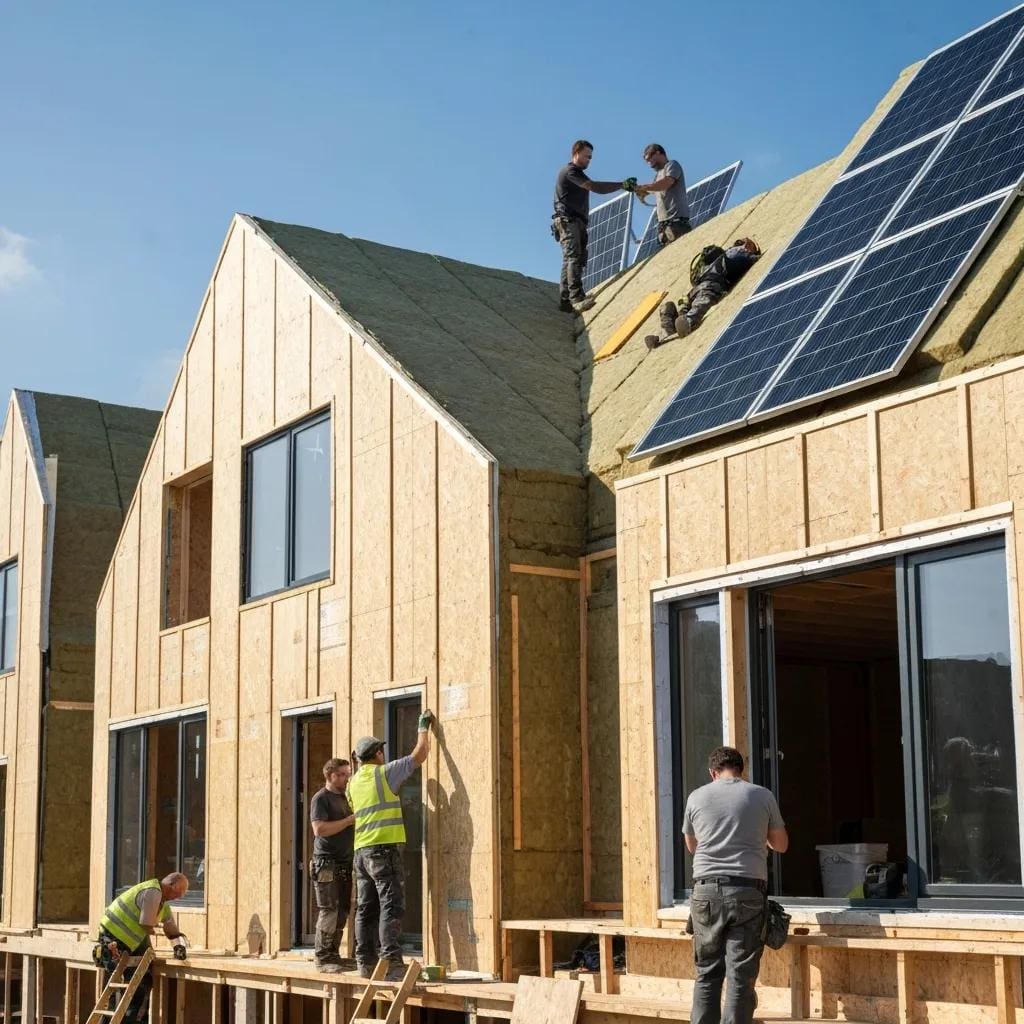
New sustainable housing in Cardiff increasingly combines low-energy design with integrated renewables to cut bills and carbon while improving comfort. Developers and architects apply Passivhaus and zero-carbon principles — high-performance insulation, airtight construction, mechanical ventilation with heat recovery (MVHR) and on-site renewables — often working with Cardiff architecture firms experienced in low-energy design to reduce operational energy and deliver consistent indoor conditions. These solutions lower costs and emissions for residents and create evidence that can be scaled across neighbourhoods. Knowing the typical feature set used in new builds helps homeowners, planners and developers choose the right standards and pushes the market toward higher-quality homes.
What are the benefits of Passivhaus and zero carbon homes in Cardiff?
Passivhaus and zero-carbon homes sharply reduce energy demand by combining rigorous fabric performance with low-carbon heat and power systems, delivering significant cuts to operational carbon and household bills. In Cardiff’s temperate climate, these standards improve thermal comfort and indoor air quality and reduce dependence on high-emission heating — a clear benefit for household budgets and public health. Certification and quality control help ensure predicted performance is realised after handover, narrowing the performance gap found in many conventional builds. That reliability makes Passivhaus especially valuable for social and affordable housing where stable energy costs and comfort matter most. Practices that use tools such as VR walkthroughs for low-energy schemes can also test layouts and daylight before construction, improving design decisions.
This report sets out fundamental design guidance for low/zero carbon buildings in Wales and complements the new-build principles discussed above.
Design Guidance for Low/Zero Carbon Buildings in Wales
This report, produced by Design Research Unit Wales, is the first output from the Low Carbon Building Environment programme’s work package ‘Design of Low/Zero Carbon Buildings’, under the Low Carbon Research Institute (LCRI). It accompanied the conference ‘Low Carbon Homes: Lessons from Practice’ at the Welsh School of Architecture on 14 October 2011. The project aims to give design teams clear, non-prescriptive guidance grounded in current best practice for delivering low/zero carbon buildings.
Design of Low/Zero carbon buildings — dwelling, 2011
Which innovative technologies are used in Cardiff’s new low-carbon homes?
New low-carbon homes in Cardiff commonly bring together air-source heat pumps, MVHR systems, rooftop solar PV and sometimes battery storage with high levels of insulation and airtightness to minimise demand. Heat pumps replace fossil boilers by moving ambient heat into homes, while MVHR retains heat and supplies fresh air to improve efficiency and indoor air quality. Solar PV provides on-site electricity to offset daytime loads and can charge batteries for evening use, reducing grid demand and operational carbon. Specifiers are also using lower-carbon materials — for example reduced-carbon concrete mixes and timber elements — to curb whole-life emissions.
How is energy efficiency improving in existing Cardiff buildings through retrofitting?
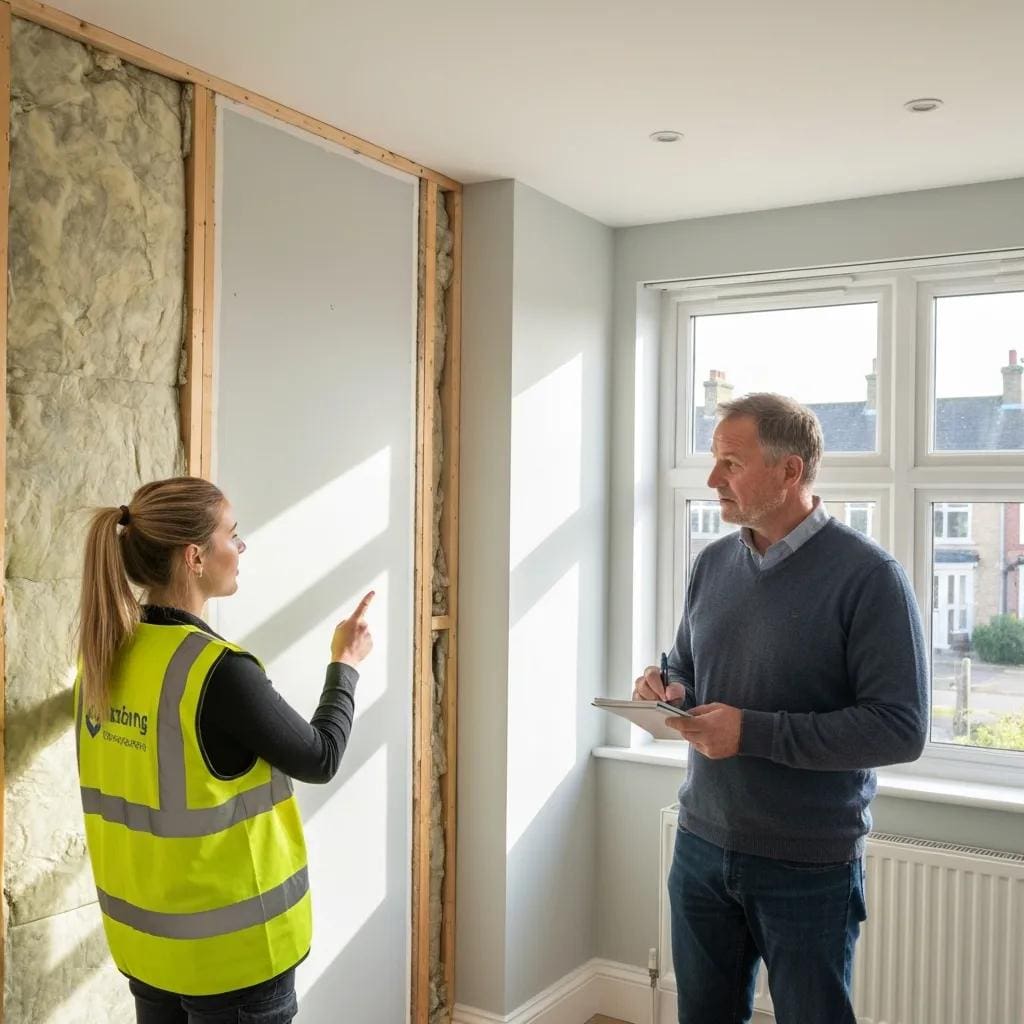
Retrofitting focuses on fabric upgrades, heating system improvements and smarter controls so buildings use less energy, cut bills and lower emissions without full rebuilds. Programmes such as Re:Fit support coordinated upgrades in public buildings, while domestic grant schemes and Welsh Government initiatives help homeowners and landlords fund insulation, glazing and heat pump installations. A staged, assessment-led retrofit pathway reduces disruption, sequences interventions for maximum benefit and connects measures to available funding. For homeowners planning broader works, our 2025 guide to budgeting full home remodel costs is a useful companion when integrating deep retrofit with wider refurbishment. Clear retrofit roadmaps and local installer networks are essential to scale impact while managing cost and building health.
What is the Re:Fit programme and its impact on Cardiff council buildings?
Re:Fit is a procurement and delivery framework designed to upgrade public buildings with energy efficiency measures and low-carbon technologies, delivering measurable reductions in operating costs and emissions. The programme aggregates projects to attract investment, standardises technical specifications and guarantees performance through monitoring — giving councillors and managers predictable outcomes. In Cardiff, Re:Fit-style activity targets municipal estates, schools and community buildings where pooled energy savings deliver both carbon cuts and budget relief. The approach produces measurable results and procurement templates that private clients can adapt for larger retrofit portfolios.
How can homeowners access grants and support for energy-efficient retrofits in Cardiff?
Homeowners should start with an energy assessment to identify priority measures — insulation, glazing, ventilation and heating upgrades — and produce a staged retrofit plan aligned with available funding. Common funding sources include council grants, Welsh Government schemes and incentives for heat pumps and insulation; eligibility and application steps differ, so early checks avoid delays. Practical steps are: commission a trusted assessment, compare quotes that reference performance metrics, and schedule measures to prevent rework; this sequencing maximises carbon and cost savings. If you need tailored project support, guidance on eligibility or help selecting contractors, contact us.
Before the table below, homeowners should understand typical retrofit measures, their likely impact on energy use, and the funding or practical notes that affect decision making. The table summarises key interventions to help compare expected outcomes and funding pathways for Cardiff properties.
| Measure | Installation Impact | Funding / Practical Notes |
|---|---|---|
| Loft and cavity wall insulation | Cuts heat loss substantially; often quick payback | Frequently eligible for grants; low disruption |
| External/internal wall insulation | Major fabric upgrade; large reduction in heating demand | May need planning consideration for listed or conservation properties |
| High-performance glazing | Reduces heat loss and improves comfort | Part-funding can be available; requires experienced installers |
| Air source heat pump (ASHP) | Replaces fossil heating; lowers operational carbon | Eligible for heat pump incentives; property needs good insulation |
| Mechanical Ventilation with Heat Recovery (MVHR) | Improves indoor air quality and retains heat | Most effective with airtightness upgrades |
This comparison helps owners prioritise measures: fabric first, then heating and controls, while checking funding to manage cost and disruption.
What are the key technologies driving Cardiff’s low-carbon construction?
Key technologies — district heating, heat pumps, solar PV and low-carbon materials — each reduce whole-life emissions across Cardiff’s building stock. District heating supplies heat from a central source to multiple buildings and works well where density and heat load justify a network. Heat pumps deliver efficient heating at building level. Solar PV and battery storage lower grid demand and decarbonise electricity use, especially when paired with demand-side controls and smart systems. Low-carbon materials reduce embodied carbon at the construction stage and are increasingly specified to amplify lifecycle benefits alongside operational savings.
How does Cardiff’s district heating network reduce carbon emissions?
District heating lowers carbon by centralising heat generation — often using large-scale low-carbon sources such as waste heat, combined heat and power or low-carbon gas alternatives — and distributing it through insulated pipes to connected buildings. When the heat source is low-carbon and the network is efficient, connected buildings can achieve much lower emissions than if each used a gas boiler. Networks work best in dense areas or large redevelopments where many users can connect; barriers include upfront network costs, stakeholder coordination and phased customer uptake. Successful roll-out balances design with customer engagement to maximise connections and carbon savings.
What role do renewable energy systems like solar panels and heat pumps play?
Solar PV and heat pumps complement each other to cut operational emissions: PV generates low-carbon electricity, and heat pumps use that electricity efficiently to provide heating, reducing energy per unit of heat delivered. LAEP targets and local energy plans often set ambitions for numbers of heat pumps and rooftop solar to meet decarbonisation pathways, because scale and quality of deployment determine city-level emissions reductions. Storage and smart controls increase the value of on-site generation by shifting use to match generation and smoothing peak demand. As the grid decarbonises, these systems multiply their carbon-saving benefits, so early adoption compounds gains.
Research on zero-carbon buildings in the UK informs the strategic goals and technology choices being adopted across Cardiff’s initiatives.
Low Energy and Zero Carbon Buildings in the UK: The Passivhaus Standard
Energy use and greenhouse gas emissions from the UK built environment reflect the wider European picture: the Energy Performance of Buildings Directive (EPBD) notes buildings account for around 40% of total energy consumption (European Commission, 2010). In December 2006 the UK Government set out a rapid move toward ‘zero carbon’ new buildings — a major step in cutting emissions from domestic and non-domestic sectors.
An investigation into the performance of low energy and zero carbon buildings in a changing climate: applying the Passivhaus standard to the UK context, R.S. McLeod, 2013
Before the next table, this EAV-style comparison helps stakeholders weigh cost, carbon and best-use cases for the technologies being deployed in Cardiff.
| Technology | Attribute | Typical Cardiff Outcome |
|---|---|---|
| Air Source Heat Pump | Installation cost range / operational savings | Moderate upfront cost; 30–50% operational carbon reduction when replacing gas boilers |
| District Heating | Scale / carbon saving potential | High upfront network cost; up to 60–80% reduction for connected buildings depending on heat source |
| Solar PV (rooftop) | Payback / carbon offset | Low to moderate cost; offsets daytime electricity demand and reduces bills |
| Low-carbon concrete / materials | Embodied carbon reduction / construction impact | Material choice can cut embodied CO₂ by 10–40%; often a small premium with long-term benefits |
This table clarifies trade-offs: heat pumps suit individual homes, district heating is efficient for dense developments, PV reduces grid electricity use, and material choices lower embodied emissions.
What challenges and opportunities affect Cardiff’s transition to a low-carbon built environment?
Cardiff faces challenges such as funding gaps, a shortage of skilled low-carbon trades and local grid constraints, but there are strong opportunities for job creation, lower household energy bills and better public health. Funding needs range from public infrastructure to private retrofit finance and call for blended solutions and innovative procurement to scale projects. Skills development — training installers, designers and assessors — creates local jobs and ensures high-quality delivery of Passivhaus, heat pump and retrofit works. Tackling these issues will unlock economic benefits and speed the transition by building local supply chains and resilient building stock.
How are skills shortages and funding needs being addressed locally?
Local responses combine training programmes, partnerships with colleges and universities, and targeted investment proposals to grow a workforce for low-carbon building work. Apprenticeships and short courses focus on heat pump installation, airtightness testing and retrofit best practice, while funding mechanisms include capital grants and procurement frameworks that aggregate demand to lower costs. Public–private partnerships and Green Growth proposals aim to channel investment into workforce development and supply chains. These measures are designed to close skill gaps and create a sustainable market for low-carbon construction in Cardiff.
What economic and environmental benefits can Cardiff expect from green construction?
Green construction creates jobs across design, material supply and installation while cutting energy bills and improving air quality — delivering health and productivity benefits for residents. Operational savings for building owners and tenants free up household and public funds, strengthening local economies. Environmental co-benefits include lower CO₂ emissions, reduced urban heat effects and conservation of resources through lower-carbon materials. Together, these outcomes support the case for upfront investment and wider rollout of low-carbon construction across Cardiff.
How can businesses and residents get involved in Cardiff’s low-carbon building initiatives?
Businesses and residents can get involved by commissioning energy audits, joining retrofit programmes, applying Passivhaus principles to new builds and working with specialist advisors to meet LAEP and One Planet Cardiff objectives. Practical steps include requesting a staged retrofit plan, tendering into local procurement frameworks and taking part in community energy projects to expand local renewable capacity. Working with a practice that focuses on architectural design for extensions and refurbishments can also make it easier to integrate low-carbon upgrades into everyday home projects. When professional help is needed — for design, technical assessments or project management — locally based sustainable building consultants and vetted contractors can provide tailored support. If you want direct project assistance, contact us.
Where can you find local green construction companies and sustainable architects in Cardiff?
Start by checking credentials — Passivhaus accreditation, heat pump installer certification and evidence of retrofit projects — to ensure quality results. Shortlist firms by reviewing case studies, asking for measured energy or carbon outcomes and requesting references for similar projects. For architectural input, our guide to top architecture firms in Cardiff and what to look for sets out useful comparison points when you’re vetting low-carbon specialists. When getting quotes, specify desired performance targets (fabric U-values, airtightness targets, expected SAP/DER outcomes) so you can compare like-for-like rather than by price alone. These vetting steps reduce the risk of underperformance and help secure contractors aligned with low-carbon goals.
How to access Cardiff Council support and contact experts for low-carbon projects?
Before you contact the council or advisers, gather key documents — property energy assessments, project scope, estimated budget and timescales — so technical advice and funding checks can be faster and more useful. Be clear about the outcomes you want (energy savings, comfort improvements, emissions targets) so advisors can map appropriate retrofit or new-build routes. For project-specific guidance, you can review our architecture project process to understand how a low-carbon scheme is structured from first enquiry to handover, then get in touch to discuss tailored design, retrofit strategies and renewables integration; advisers can also clarify grant eligibility and procurement options. Preparing these materials speeds assessment and helps teams propose technically and financially viable solutions.
- Request an assessment: Collect energy data and summarise project goals in a single document.
- Compare proposals: Ask for performance metrics, timelines and warranties in quotes.
- Plan funding: Work with advisers to map grants and staged finance before signing contracts.
- Join local initiatives: Community energy schemes or retrofit trials boost collective uptake.
- Train and hire locally: Businesses can build in-house capability or partner with accredited specialists.
- Advocate for quality: Request performance metrics in planning and procurement to raise standards.
| Project Type | Key Features | Measured Benefits (Energy/Cost/Carbon) |
|---|---|---|
| Passivhaus housing development | High insulation, airtightness, MVHR, modest PV | Very low energy demand; significant running cost savings; 60–90% operational energy cut |
| Zero-carbon new build | On-site renewables, efficient systems, low-carbon materials | Net-zero operational emissions with lower lifecycle carbon intensity |
| Retrofit pilot on public building | Insulation, ASHP, controls, monitoring | Measurable energy savings, lower council operating costs, tangible CO₂ reductions |
- Prioritise fabric-first: Improve insulation and airtightness to cut running costs and make later measures more effective.
- Match heating to demand: Use district heating for dense sites and heat pumps for suitable individual homes.
- Use verified installers: Accreditation and measured performance reduce the risk of a performance gap.
Frequently asked questions
What are the main challenges Cardiff faces in achieving its low-carbon goals?
Cardiff’s main challenges include funding shortfalls, a limited pool of skilled low-carbon trades and constraints on local grid capacity. These issues can slow retrofit and new-build programmes. However, they also create opportunities — jobs in green construction, lower household energy bills and better public health. Strengthening local supply chains and investing in training will help Cardiff overcome these barriers and accelerate its low-carbon plans.
How can local businesses contribute to Cardiff’s low-carbon initiatives?
Local businesses can support the transition by joining community energy projects, adopting sustainable operations and taking part in retrofit programmes. Investing in staff training for low-carbon technologies and partnering with local authorities or delivery partners helps build the skills the city needs. Businesses that act now often benefit from lower operating costs and stronger community reputation.
What support is available for landlords looking to retrofit their properties?
Landlords in Cardiff can access council and Welsh Government grants and funding schemes that often cover insulation, heating upgrades and other energy-efficiency measures. Start with an energy assessment to identify priority actions and create a staged retrofit plan. Engaging local installer networks and sustainable building consultants can smooth the process and help ensure compliance with low-carbon standards.
How do energy assessments benefit homeowners in Cardiff?
Energy assessments give homeowners a clear picture of their property’s performance and identify the most effective improvements. Assessments prioritise measures such as insulation, heating upgrades and ventilation, helping owners create a tailored retrofit plan. Knowing likely energy savings and costs makes it easier to make informed investment decisions that reduce bills and emissions.
What role do community energy projects play in Cardiff’s sustainability efforts?
Community energy projects engage residents directly in local renewable generation and energy efficiency programmes. These initiatives — from rooftop solar co-operatives to local energy trials — reduce reliance on fossil fuels, cut emissions and build local ownership of the energy transition. They also provide education and a platform for community collaboration on sustainability.
How can residents stay informed about Cardiff’s low-carbon initiatives?
Residents can stay informed by subscribing to council newsletters, following local social channels and attending community meetings or workshops. The council publishes updates on new programmes, funding and events related to sustainability. Getting involved with local environmental groups and public consultations is another good way to follow projects and have your say in Cardiff’s low-carbon journey.
Conclusion
Cardiff’s commitment to a low-carbon built environment improves energy efficiency and creates healthier, more comfortable homes and workplaces. By embracing proven technologies and practical retrofit pathways, the city is reducing emissions and operational costs while creating local jobs and resilience. Homeowners and businesses are encouraged to explore local support, use resources such as our guide on how home renovations in Cardiff can boost property value and reach out for tailored advice — join us in building a greener Cardiff.