How to modernise your Cardiff city-centre commercial property to boost footfall
Here “modernise” means improving a Cardiff city-centre commercial property through smarter design, targeted technology and focused marketing to drive more visits and increase long-term asset value. This guide shows what that looks like for façades, interiors, sustainability and smart systems — and how each change turns into measurable increases in visits and spend. Many landlords and occupiers in Cardiff face falling passer-by conversion, tired façades and rising energy bills; combining experiential retail, local SEO and practical retrofits addresses all three by improving visibility, comfort and discoverability, especially when aligned with the city’s wider evolution described in our overview of Cardiff city centre. The guide is organised into six practical areas you can act on: current Cardiff trends, shopfront revitalisation, interior design strategies, sustainable and smart upgrades, marketing channels that drive visits, and measurement plus future-proofing. Throughout you’ll find step-by-step tactics, comparison tables for materials and technologies, and realistic marketing checklists to help you prioritise investments that deliver footfall gains.
Key trends shaping Cardiff’s commercial property market
Cardiff’s commercial scene is shifting toward mixed-use, experience-led destinations where retail sits alongside leisure and events to pull both daytime and evening footfall. Shoppers increasingly value atmosphere and discovery over pure transactions, so schemes that combine retail with hospitality or event space tend to capture longer dwell and more repeat visits. Sustainability and ESG are also driving refurb choices — lower running costs and visible green credentials attract conscious shoppers and better tenants. The rest of this section outlines the main trends and what they mean for modernisation priorities in city-centre shops and commercial units, and how coordinated design through commercial interior architecture supports those goals.
Watch for redevelopment of underused units, growth in independent retailers and pop-ups, and more investment in public events and arcade revitalisation that draw local and visitor traffic. These shifts create chances to align refurb work with local programming, so a refreshed shopfront can double as a stage for events or collaborations. Understanding these patterns helps you decide whether to prioritise façade upgrades, experiential fit-outs or smart systems to support events and seasonal programming, and whether a broader package of commercial architectural services is appropriate for your property.
The implication for owners and occupiers is straightforward: invest in visibility, adaptable experiences and sustainable operations to match Cardiff’s evolving offer. The next subsection looks more closely at how the city centre is changing as a retail and business hub and what that means for footfall strategies.
How Cardiff city centre is evolving as a retail and business hub
Cardiff is moving from a traditional high street to a layered hub where retail, leisure and cultural events coexist, spreading visits across the day and week. Shopper behaviour now favours discovery and experience, so mixed-use schemes and short-term pop-ups give people fresh reasons to return. Independents and specialist stores often act as traffic drivers by offering unique ranges national chains don’t, while arcades and curated event weekends lift overall area footfall. These shifts mean refurbishment should prioritise flexible space, adaptable shopfronts and strong local marketing connections.
Because footfall varies with the events calendar and tourist cycles, timing upgrades to local programming amplifies the benefit. A visible, well-lit shopfront and an interior that can host small workshops will pick up extra visits during arcade weekends or markets. That local context leads into why experiential retail works well in Cardiff and how to apply it across different budgets.
Why experiential retail matters for increasing footfall in Cardiff
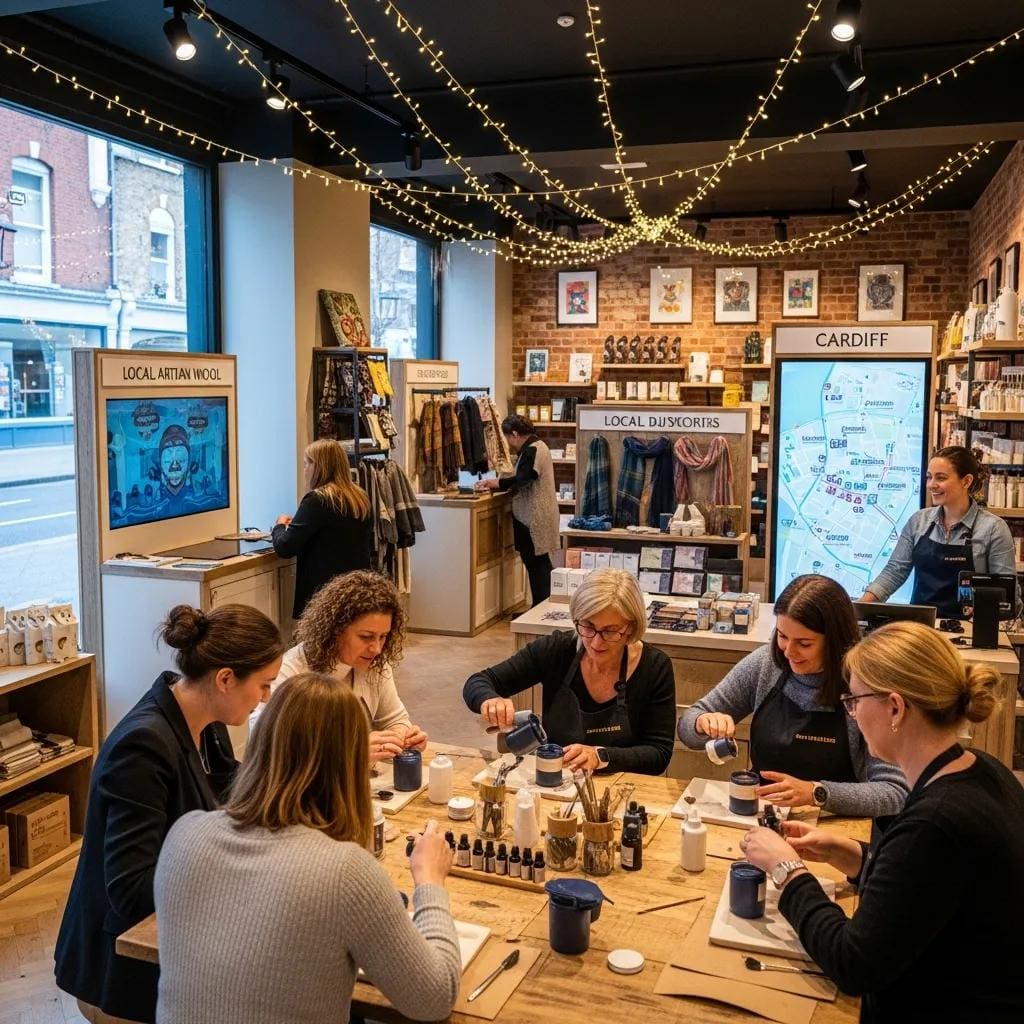
Experiential retail gives people reasons to visit beyond buying: events, workshops and sensory experiences extend dwell time and encourage social sharing. In Cardiff, where arcades and events attract passers-by, shops that host pop-ups, tastings or interactive displays turn curiosity into meaningful visits and repeat custom. A simple low/medium/high budget framework helps plan activity: low-cost window activations and in-store demos; medium investments like modular displays and local collaboration programmes; and higher-budget immersive fit-outs with AR or digital signage. Each tier lifts dwell time and conversion probability, and you can measure uplift with footfall analytics and sales tracking. For larger schemes, pairing experiential ideas with digital tools such as AR-driven project visualisation makes it easier to test concepts before you commit on site.
Run experiential ideas on a pilot → test → scale basis to control costs and verify ROI before committing to larger fit-outs. Start with weekly events or weekend pop-ups and measure dwell time and local search signals to decide whether to expand. The next section covers practical shopfront improvements that turn experience into curb appeal and more visits.
How to revitalise your shopfront to attract more customers in Cardiff
A shopfront revamp improves visibility, signals quality and reduces barriers to entry — all directly increasing passer-by conversion through clearer sightlines, better lighting and consistent branding. In Cardiff, material choice, signage placement and glazing matter for durability and heritage context. Begin with an audit that checks permissions, sightlines and how your shop links to nearby arcades or public spaces, then prioritise the interventions that deliver quickest uplift. Below are practical steps, from quick wins to larger upgrades.
Practical shopfront upgrade steps to follow:
- Audit sightlines, pedestrian flow and local signage regulations to identify priority interventions.
- Improve illumination and display lighting to boost evening and wet-weather visibility.
- Replace or restore glazing and frames to create uninterrupted views into key displays.
- Upgrade signage for legibility and brand coherence using durable materials.
- Install discreet security measures that preserve transparency and street appeal.
These steps map a route from assessment to installation and should include a permissions review for conservation areas or listed façades; if you are unsure about requirements, our overview of the planning application process explains how to approach shopfront changes in sensitive locations. The following subsection compares common materials to help you pick the right system for Cardiff units.
Materials and designs that work best for Cardiff shopfront renovation
Material choice depends on budget, desired look and local character: full glazing maximises visibility, aluminium gives low maintenance and clean modern lines, while timber brings warmth that suits heritage areas. Each option balances cost, durability and upkeep differently — match the material to the shop’s location. Modern precincts accept sleek aluminium or composite frames; arcades and conservation zones may favour timber or sympathetically finished aluminium. Design can range from full-height glazing for maximum display to framed bays that respect historic proportions; the principle is the same: better visibility and coherent design increase impulse visits and brand perception.
To guide decisions, the table below compares common shopfront systems on cost, durability, visual impact and maintenance.
| Material | Cost range | Durability | Visual impact | Maintenance |
|---|---|---|---|---|
| Glass (large glazed units) | Medium–High | Moderate (depends on framing) | Very high — maximum visibility | Regular cleaning; occasional resealing |
| Aluminium frames | Medium | High | Modern, crisp lines; flexible finishes | Low — powder coating retains finish |
| Timber | Medium–High | Varies (requires treatment) | Warm, characterful — suits heritage areas | Periodic painting/treatment required |
This comparison shows glazing choices should reflect local character and maintenance capacity; glass with aluminium framing usually balances visibility and durability for many Cardiff city units. Next, we cover how to combine security and visibility without harming curb appeal.
How security and visibility features can improve shopfront appeal
Modern security options — internal grilles, retractable screens and smart alarms — let shops stay visually open while protecting assets, preserving evening visibility and deterring crime without creating a fortress-like frontage. Adding CCTV, well-directed lighting and laminated glazing improves both perceived safety and real security, which supports insurance profiles and customer confidence. The balance is deterrence with transparency: internal shutters and laminated glass keep displays visible while reducing smash-and-grab risk. When security is integrated well, it actually increases appeal and encourages passers-by to enter, especially after dark.
Consider sensor-activated lighting and monitored alarms to cut vandalism risk while keeping the look. These measures can also reduce insurance premiums and justify longer opening hours during event weekends. If you want tailored design or installation quotes for shopfront materials and security options, contact us.
Effective commercial interior design strategies for Cardiff retail spaces
Good interior design guides customer flow, highlights merchandising and creates an atmosphere that increases dwell time — direct drivers of conversion and average transaction value. In Cardiff, adapt layout and lighting to local shopper habits: create a clear entrance, strong feature displays and logical transition zones that lead visitors toward product focal points and checkout. Layered lighting — ambient, task and accent — directs attention, improves product presentation and sets mood for different trading periods. This section outlines layout tactics and experiential elements that improve customer experience and measurable outcomes, and shows where a structured commercial fit-out design service can add value.
A concise checklist of layout and lighting tactics to help owners and fit-out teams implement practical changes.
- Define clear zones: entrance, feature, transition and checkout to control sightlines and flow.
- Use focal lighting on displays and product islands to draw attention and increase perceived value.
- Keep circulation clear with adequate aisle widths and directed sightlines to anchor products.
- Add comfortable dwell spots or benches to encourage longer browsing.
These tactics reduce friction and support discovery, which lifts conversion rates and revenue per square metre. The next subsection gives specific layout and lighting techniques and measurable targets.
How interior layout and lighting enhance customer experience
A deliberate layout organises space into zones that encourage exploration: an inviting entrance, an attention-grabbing feature area, transition aisles and an efficient checkout, each with a clear role. Lighting — warm focal lights on merchandise and cooler ambient light for circulation — guides customers and creates contrast that elevates product appeal; the mechanism is directing sight to higher-margin items. Small changes like moving a display or adding a pendant light can increase dwell time and conversions by making products easier to find and try. Track results with simple metrics: dwell time, repeat visits and sales per square metre to quantify design impact.
Test layout changes with short pilots so you can measure uplift before committing to larger fit-outs; this iterative approach is covered in the measurement section below. The following subsection explores interactive and experiential elements that deepen engagement.
The role of interactive and experiential elements inside shops
Interactive displays, touchscreens, product demos and workshops create multi-sensory experiences that increase dwell time and encourage social sharing — clear routes to repeat visits and larger baskets. Examples include product testing stations, ticketed workshops or short collaborations with local makers that tie into Cardiff’s event culture. Technologies such as QR-linked content or modest AR features can be trialled cheaply before scaling. Pilot programmes give measurable signals — attendance, dwell time and social posts — that show which experiential investments are worth scaling.
Design experiential elements to be modular so they can rotate seasonally or tie into local events, keeping relevance high and giving people repeat reasons to return. That modularity links directly to sustainability and smart upgrades discussed next, where energy and tech choices support programming.
How sustainable and smart upgrades boost your Cardiff property’s value
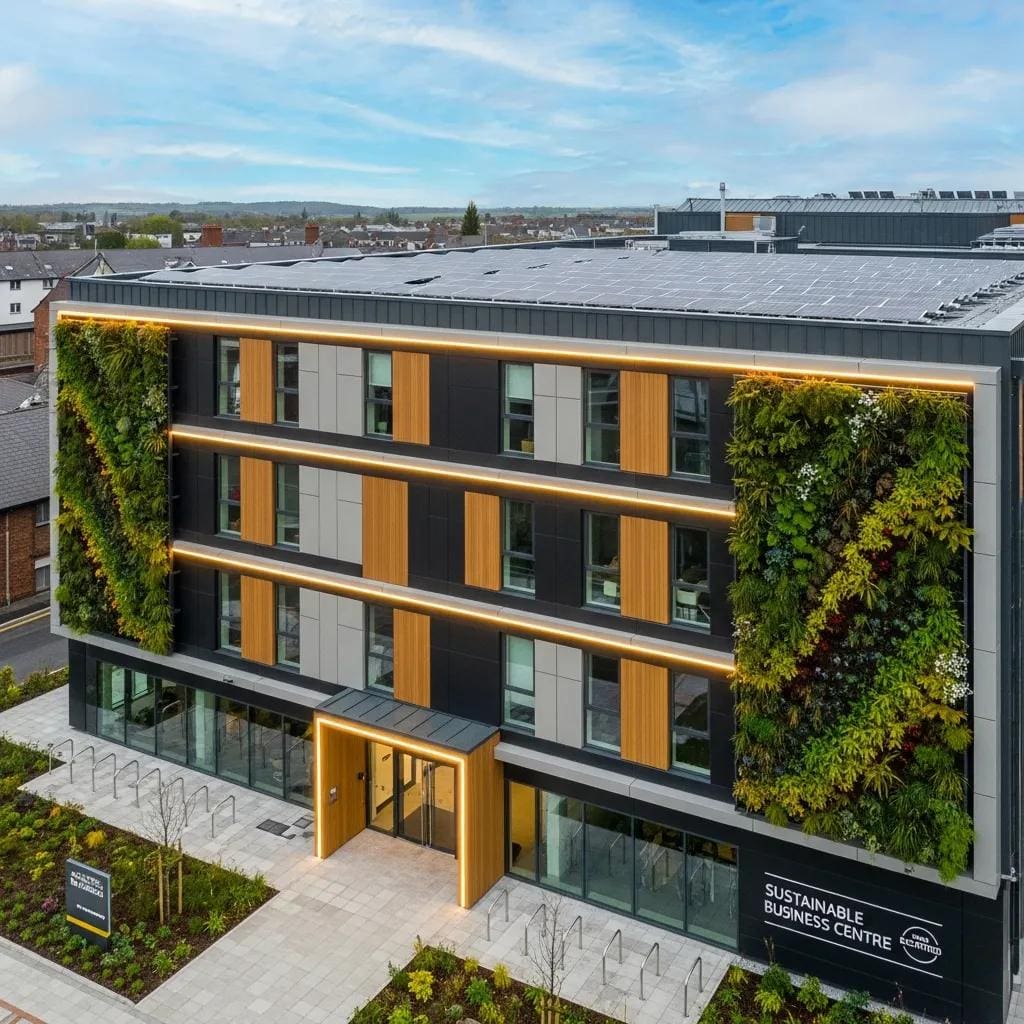
Sustainable retrofits and smart building tech cut operating costs, meet regulatory expectations and create marketing value that draws eco-aware customers. Practical measures — LED lighting, improved insulation and a building management system (BMS) — deliver immediate efficiency gains, while digital signage and occupancy sensors improve engagement and responsiveness. The value is twofold: lower running costs lift net operating income, and visible sustainability increases brand preference and footfall among environmentally conscious shoppers. Below are recommended measures and a comparison table to help you prioritise; for a more strategic view of low-energy design, our guide to energy-efficient commercial architecture sets out broader principles.
Key sustainable and smart upgrades to consider:
- LED lighting retrofits to reduce energy and improve display quality.
- Insulation and glazing upgrades to lower heating demand and improve comfort.
- BMS and occupancy sensing to optimise HVAC and lighting schedules.
- Solar PV where roof access and planning allow, to offset grid consumption.
These measures vary in capital cost and payback; factor in grant eligibility and local planning constraints for Cardiff properties. The table below compares common upgrades by capex, typical payback and how they signal footfall impact.
| Upgrade | Capex | Typical payback | Footfall impact | Grant eligibility |
|---|---|---|---|---|
| LED lighting | Low–Medium | 1–3 years | Moderate (better displays) | Often eligible for small grants |
| Building Management System (BMS) | Medium–High | 3–6 years | Moderate (improved comfort) | Possible regional support |
| Insulation & glazing | Medium–High | 4–8 years | Moderate (comfort, acoustic) | Potential conservation area considerations |
| Solar PV | Medium–High | 5–10 years | Low direct; high brand value | Often eligible for incentives |
This comparison helps you prioritise low-regret investments such as LED and BMS that reduce costs and improve the customer environment. The next subsection explains how smart tech directly improves engagement and measurable footfall.
Recommended sustainable refurbishment practices for Cardiff properties
Low-regret steps — LED retrofits, thermostatic controls and draught-proofing — deliver quick paybacks while improving comfort and cutting bills, making them practical for small and medium owners. Behavioural measures such as staff training on systems and energy-aware opening schedules complement physical works to maximise savings. In conservation areas, use sympathetic materials and lightweight retrofits to respect heritage while boosting efficiency. Explore regional funding and grant options that support commercial energy upgrades where available, and consider how specified products align with our wider approach to renewable and low-impact materials.
These green improvements also have marketing value: energy performance gains and visible green features can be promoted locally to attract eco-minded shoppers. The next subsection covers how smart building tech creates interactive benefits linked to marketing.
How smart building technologies increase footfall and engagement
Smart tech — occupancy sensors, digital signage and basic BMS — improves comfort and responsiveness while enabling real-time marketing to visitors, encouraging longer stays and return visits. Occupancy analytics give clear metrics — dwell time and peak periods — that help you tailor staffing and schedule events to maximise conversion. Digital signage can promote in-store events or same-day offers synced to local calendars to capture event-driven traffic. These systems create a feedback loop: better data shapes marketing, which attracts footfall, which produces more data to optimise operations.
Start with analytics and small remotely-managed displays to test engagement before investing in full BMS integration. The measurable benefits described here lead into tactical marketing strategies that amplify physical upgrades.
Which marketing strategies reliably drive footfall for Cardiff city-centre shops?
When aligned with physical upgrades, several targeted marketing strategies consistently increase footfall: local SEO to capture nearby searchers, event partnerships to tap into city programming, social media and user-generated content to amplify reach, out-of-home (OOH) placements in high-traffic corridors, and loyalty/CRM tactics to encourage repeat visits. Each channel varies by cost, measurability and time-to-impact, so combine immediate actions (local listings, social posts) with medium-term plays (SEO and partnerships). Below are the high-impact approaches, followed by a comparison table to help prioritise.
The five primary strategies to drive local visits are:
- Local SEO and Google Business Profile optimisation to capture intent-driven searches.
- Event partnerships and pop-ups that tie into Cardiff’s cultural calendar.
- Social media campaigns and user-generated content to build awareness and FOMO.
- Out-of-home advertising or street furniture placements near arcades and transit hubs.
- Loyalty programmes and targeted promotions to convert first-time visitors into regulars.
Each tactic plays a different role: SEO captures search intent, events create on-the-day reasons to visit, and social content extends discoverability. The table below compares channels by cost, reach and measurability.
| Channel | Cost | Expected reach | Measurability | Time-to-impact |
|---|---|---|---|---|
| Local SEO | Low–Medium | High (searchers nearby) | High (search & direction requests) | Medium |
| Social media | Low–Medium | Medium–High | Medium (engagement metrics) | Short–Medium |
| Out-of-home (OOH) | Medium–High | High (passerby visibility) | Low–Medium | Short |
| Events/partnerships | Low–Medium | Localised high engagement | Medium (attendance tracking) | Short |
| Loyalty/CRM | Low–Medium | Medium (repeat customers) | High (redemptions & visits) | Medium |
Use this comparison to match channels to budget and timing: combine SEO and social for steady growth and use events for spikes around key dates. After these tactics are in place, measurement is essential to prove ROI and guide the next round of investment. If you want help with local SEO, event tie-ins or multi-channel campaigns for Cardiff properties, contact us.
How local SEO improves visibility for Cardiff commercial properties
Local SEO makes your business discoverable by ensuring listings and on-page signals match local search intent so people looking for shops, services or events in Cardiff find you first. Key steps: optimise your Google Business Profile, use local keywords such as “Cardiff shop front design” on landing pages, add structured data for location and opening details, and keep citations consistent across directories. Measurable outcomes include more direction requests, calls from listings and website sessions from local queries. Regularly review search terms and optimise event pages to match what nearby customers are searching for. Tie these local signals into physical upgrades and event programming — visibility drives visits, and better experiences convert them into repeat footfall. The next subsection explains how events and community engagement act as tactical drivers.
How leveraging local events and community engagement increases footfall
Partnering with local events, arcades and cultural weekends connects your shop to moments when footfall is naturally higher, turning passive passers-by into active visitors with timely promotions and in-store activities. Practical tactics include pop-up collaborations with makers, co-hosting workshops during event weekends and offering event-exclusive promotions to encourage immediate purchases. Start promotion two to three weeks before an event with clear calls to action and on-site signage to capture walk-ins. Measure impact by comparing event weekend footfall and sales to baseline periods to quantify uplift and refine future partnerships.
Event partnerships also generate content for social media and local SEO, amplifying reach and making your store part of the city’s cultural calendar. With marketing and physical upgrades working together, the final key area is measuring impact and future-proofing investments.
How to measure success and future-proof your Cardiff commercial property investment
Measuring success needs a clear KPI framework — footfall, dwell time, conversion rate, revenue per square metre and local search visibility — that links physical upgrades and marketing to financial outcomes. Use a mix of sensors, transactional data and analytics to triangulate performance: footfall counters and occupancy sensors for visits and dwell; till and ecommerce data for conversion and spend; GMB insights and search rankings for discoverability. Set a review cadence — monthly for operational tweaks and quarterly for strategic evaluation — to keep improving and to prioritise next investments. For larger refurbishments, aligning this data with a structured architectural project process makes it easier to phase works and track returns over time.
Practical KPI checklist to track improvements:
- Footfall counts and dwell time to measure visit frequency and engagement.
- Conversion rate and average transaction value to track commercial outcomes.
- Revenue per square metre to compare returns against investment cost.
- Local search metrics (impressions, direction requests) to assess discoverability.
These KPIs form the data foundation for a pilot → test → scale approach that validates upgrades before full deployment. If you want help setting up measurement systems, audits or bespoke improvement plans, contact us.
Key performance indicators that track footfall and property value improvements
Track a balanced set of KPIs that reflect visits, engagement and financial impact: footfall, dwell time, conversion, average transaction value and revenue per square metre give a complete view of physical and commercial performance. Add digital signals — local search impressions, direction requests and social engagement — to capture upstream marketing effects. Data collection methods range from manual counts and till reconciliation to occupancy sensors and integrated analytics platforms; the idea is to combine sources to confirm trends and reduce noise. Benchmarks depend on format and location, but consistent measurement over time is the most reliable way to show uplift from specific interventions.
Use A/B testing for layout, lighting and promotions to isolate each change’s effect and direct capital to the highest-return projects. The next subsection explains how continuous improvement sustains long-term growth.
How continuous improvement sustains long-term footfall growth
Continuous improvement relies on a repeatable cycle: plan, pilot, measure and scale — applied to layout changes, experiential programming and marketing tests. Set quarterly reviews to check KPI trends, run short pilots for new ideas and use stakeholder feedback (staff, customers, local partners) to prioritise next steps. A/B testing of merchandising, lighting scenes or social campaigns reveals what drives the biggest uplift before committing to larger fit-outs. Engaging the local community and adapting offers to seasonal patterns keeps your offer relevant and resilient through changing market conditions.
Institutionalise this process — regular data reviews, pilot budgets and clear decision rules — to future-proof your investment and ensure funds go to proven initiatives rather than speculative projects. If you’d like an audit, performance measurement setup or a bespoke roadmap to scale successful pilots, contact us.
Frequently Asked Questions
What are the benefits of modernising a commercial property in Cardiff?
Modernising a commercial property in Cardiff boosts appeal and functionality. Benefits include higher footfall, a better customer experience and greater asset value. Upgrades such as improved shopfronts, visible sustainability features and smart technology attract more visitors and encourage longer stays. Modernisation also aligns your offer with current trends — experiential retail and eco-friendly practices — helping your property stay competitive and ultimately increasing sales and brand presence locally.
How can I assess the effectiveness of my modernisation efforts?
Assess effectiveness with clear KPIs: footfall counts, dwell time, conversion rates and revenue per square metre. Combine footfall counters, sales data and customer feedback to evaluate changes and spot trends. Run A/B tests on specific upgrades to isolate impact. A data-driven approach like this shows return on investment and guides where to focus future improvements.
What role does local community engagement play in attracting footfall?
Local community engagement builds relevance and connection. Partnering with local events, hosting workshops or collaborating with nearby businesses creates experiences that draw people in. Community activity also boosts visibility and word-of-mouth, and promoting these events via social and local channels brings in both residents and visitors — increasing foot traffic and loyalty.
How can I ensure my marketing strategies align with my property upgrades?
Align marketing and upgrades by using the same message across channels. Promote new features and experiences through social posts, local SEO content and event announcements, and keep branding consistent with the upgraded look. Time campaigns to coincide with completion or launch events so the physical improvements and marketing momentum work together to attract visitors.
What are some cost-effective ways to modernise a commercial property?
Focus on high-impact, low-cost changes: improve lighting, refresh signage and enhance window displays to boost visibility quickly. Energy-efficient steps like LED lighting or smart thermostats cut operating costs while supporting sustainability messaging. Community events and collaborations raise your profile without large capital expense. Prioritise these strategic updates to deliver noticeable increases in footfall and engagement.
How can I leverage technology to enhance customer experience in my property?
Use smart building systems, interactive displays and digital signage to improve customer experience. Occupancy sensors and BMS optimise comfort and energy use; QR codes and interactive screens engage visitors with product info and offers. Apply analytics to understand behaviour and inform layout and marketing choices, so your property better meets visitor needs.
Conclusion
Modernising a Cardiff city-centre commercial property can materially increase footfall, improve customer experience and raise long-term asset value. By combining targeted design, pragmatic technology and focused marketing, you can create an inviting, resilient space that attracts both locals and visitors. Use the pilot → measure → scale approach here to direct investment to what demonstrably works. For tailored advice on modernisation strategies and how they fit into a wider architectural brief, Choose an architecture firm in Cardiff and contact us today.